F&B Jobs Website: Hire Faster for Singapore Roles
F&B Jobs Website Singapore: Hire Better F&B Talent
Introduction
Hiring for a restaurant in Singapore can feel a bit like service on a packed Friday night. Orders are flying in, guests are waiting, and the only thing missing is enough reliable staff to keep everything moving smoothly. That is where a focused F&B jobs website can make a real difference for both employers and candidates.
Singapore’s F&B sector is moving fast with new concepts, delivery models, and guest expectations. Many businesses still rely on general job boards or traditional agencies, which often feel slow, expensive, and not quite right for kitchen, bar, and service crew roles. At the same time, singapore chef jobs, baristas, bartenders, and managers want a simple place to find real F&B opportunities instead of scrolling through pages of unrelated jobs.
In such a competitive hospitality market, filling roles quickly with the right people can be the difference between long queues and smooth turnover. Specialised F&B job websites bring everything into one place, with targeted listings, Singapore-focused filters, and a talent pool that actually wants to work in the industry.
“You are only as good as the team behind your service.”
This thought is shared by many restaurant owners across Singapore who see staffing as their biggest daily challenge.
This guide walks through how F&B hiring in Singapore is different, why a specialised F&B jobs website matters, and how both employers and job seekers can get better results. Along the way, it shows how Good Shift Singapore gives restaurants, cafés, hotels, and bars a simple and cost-effective way to hire, while helping candidates find real F&B work across the island.
What Makes F&B Recruitment Different In Singapore
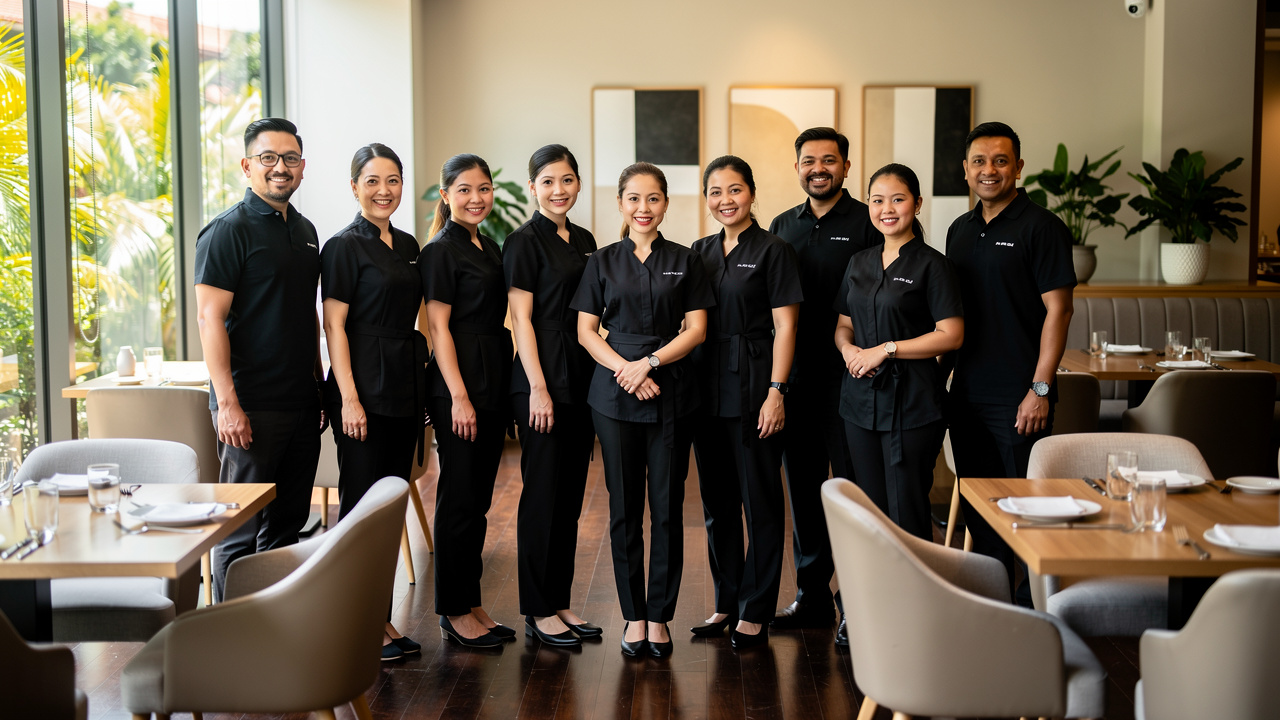
Recruiting for F&B in Singapore is not the same as hiring for a typical office role. The range of venues alone is wide, from hotel restaurants in the CBD and Orchard Road, to hawker-inspired concepts in malls, to cosy cafés in estates like Hougang or Tampines. Each outlet needs a different mix of kitchen jobs, service, and management staff, often on tight timelines.
Turnover is naturally higher in hospitality, with restaurant job openings remaining consistently high across the sector. Staff move for better hours, higher pay, or simply because the work is demanding. That means many operators are almost always hiring, either to grow or to replace people who have moved on. A general job board can quickly become noisy here, with many applicants who are not serious about F&B or do not match the hours and shift patterns.
Another key difference is the blend of permanent and flexible staffing. A single venue may need full-time chefs and supervisors, but also part-time service crew, casual banquet staff, and temporary bar staff for events or festive periods. A good F&B jobs website must support all these patterns clearly, so employers can label roles and job seekers can pick what fits their lives.
Skills gaps add more pressure. Experienced chefs, confident bartenders, and strong restaurant managers are often in short supply. On top of that, employers must consider Singapore’s regulations around who they can hire, from Singaporeans and PRs to LTVP holders and foreign staff with valid passes. Clear job ads need to spell out eligibility while still attracting enough interest.
Finally, dining in Singapore is multicultural. Many venues value staff who can speak English plus another language common among their guests, such as Mandarin, Malay, or Tamil. For some corporate or sales roles that support F&B, Japanese or other languages can also be a plus. All of this makes F&B recruitment here more specialised, which is why targeted platforms are so useful.
Why Choose A Specialised F&B Jobs Website
A general job portal can work for some hiring needs, but F&B roles are different enough that a focused approach pays off. A specialised F&B jobs website cuts out a lot of noise, connects employers with people who actually want to work in hospitality, and speeds up hiring for both sides.
The Cost-Effectiveness Advantage
Posting F&B roles on broad job boards often means dealing with add-ons such as credits, boosts, and paid visibility. On top of that, agencies can charge fifteen to twenty five per cent of annual salary for each successful hire, which is a big bill for a café, bar, or small group. A focused F&B jobs website such as Good Shift Singapore keeps things far simpler, with straightforward job ads and transparent pricing.
Because the audience is already narrowed to F&B and hospitality, employers are not paying for reach to people who will never apply. This especially helps smaller operators that need to watch every dollar but still want access to serious talent. By shifting roles away from agency-heavy hiring and into a platform like Good Shift Singapore, many businesses save thousands while still filling roles quickly.
Targeted Reach To Qualified Candidates
With general job boards, it is common to receive applications from people with no F&B background at all. Screening these takes time that managers and owners simply do not have. On a dedicated F&B jobs website, most candidates already work in hospitality or want to enter it, which instantly raises the baseline quality of applications.
Good Shift Singapore focuses only on F&B and hospitality roles in Singapore. That means commis chefs, service crew, bar staff, and managers search here first when they are ready to move. Employers also reach people across the country, from Marina Bay and Orchard to Changi Airport, Jurong, and Woodlands. Because the platform appeals to active and passive F&B job seekers, the chance of finding a good match rises, and the time from posting to hire drops.
Comprehensive Role Coverage
One of the biggest strengths of a specialised F&B jobs website is that it covers every type of role under one roof. A restaurant can post for junior cooks, Chef de Partie, Sous Chefs, and senior kitchen leaders at the same time. Service teams can hire entry level crew, experienced captains, and service managers without switching platforms.
Beyond the floor and kitchen, Good Shift Singapore also supports corporate and office roles that keep F&B companies running, such as HR, sales, and admin. Employers can list full-time, part-time, contract, and temporary positions clearly, so candidates know what to expect. This end to end coverage makes Good Shift Singapore a single, simple place for almost any F&B hiring need in Singapore.
“Hire once, hire right” is a common saying among HR managers. A focused platform reduces repeat hiring and saves both time and money.
Types Of F&B Roles You Can Fill Through Job Websites
A good F&B jobs website is more than a place for basic service crew ads. It mirrors the full structure of the industry, from back of house to head office. Understanding the range of roles available helps employers plan their hiring and gives job seekers a clearer view of potential career paths.
A quick overview of common F&B role categories looks like this:
Department | Entry-Level Roles | Mid-Level Roles | Senior Roles |
|---|---|---|---|
Kitchen | Commis Chef, Cook | Demi Chef de Partie, Chef de Partie | Sous Chef, Senior Sous Chef, Head Chef |
Front-Of-House | Service Crew, Runner | Captain, Bartender, Host/Hostess | Restaurant Manager, Bar Manager |
Management | Supervisor, Team Leader | Assistant Manager | Operations Manager, General Manager |
Corporate & Support | Admin Assistant, HR Assistant | Executive, Coordinator | Manager, Director (HR, Sales, Marketing) |
Kitchen And Culinary Positions

The kitchen is the engine of any F&B operation, and specialised job sites reflect that. At entry level, roles such as Commis Chef and Cook help new talent learn the basics, support senior chefs, and handle prep work. With experience, they can move into Demi Chef de Partie and Chef de Partie roles, often with a focus such as all day dining, breakfast, barbecue, or pastry.
Further up the ladder, Junior Sous Chef, Sous Chef, and Senior Sous Chef roles carry more responsibility for menu execution, staff training, and kitchen standards. There are also specialist paths such as pastry focused positions or cuisine specific chefs for Chinese, Western, or Japanese kitchens. On a platform like Good Shift Singapore, candidates can see this ladder clearly and aim for roles that match their skills and salary expectations, for example a Junior Sous Chef earning around three thousand two hundred to three thousand six hundred dollars a month.
Front-Of-House And Service Roles

Service teams shape the entire guest experience, so they feature strongly on any dedicated F&B jobs website. Listings often start with general Service Crew positions, covering order taking, food running, and basic guest care. With experience, staff can move into more focused roles such as Bartender or Senior Bartender, where drink knowledge and guest interaction matter even more.
Many venues also look for Service Leaders, captains, and hosts or hostesses to welcome guests, manage seating, and support smooth operations during busy periods. These roles call for strong communication, a friendly attitude, and the ability to work as a team under pressure. For job seekers, they offer clear steps into supervisory and management positions over time.
Management And Leadership Positions

Well run F&B outlets need steady leadership, and a specialised jobs site brings these positions to the same audience as crew level roles. Restaurant Managers and Operations Managers oversee day to day service, staff scheduling, and guest satisfaction, while keeping an eye on costs and revenue. Assistant Managers, including those with HR and admin duties, support hiring, payroll, and paperwork.
These roles require a mix of leadership, financial awareness, and coaching skills. Employers use Good Shift Singapore to reach candidates who have worked their way up through the trade, understand Singapore’s guests, and can guide both kitchen and service teams.
Corporate And Specialised Functions
The F&B sector relies on more than just kitchens and dining rooms. Many companies also need Sales Executives, Business Development Managers, HR specialists, and admin staff who understand the industry. Food Technologists and product development roles support manufacturers and suppliers that sell to restaurants and hotels.
Marketing, brand management, supply chain, and procurement roles appear as well, especially in groups with multiple outlets. Good Shift Singapore supports this full spread of roles, giving employers access to candidates who want to stay in F&B but perhaps move off the floor into more corporate or technical careers.
How Employers Can Post Jobs Effectively On Good Shift Singapore
Posting a job on Good Shift Singapore is designed to be as simple as possible, because most F&B owners and managers do not have time to fight with complicated systems. After creating an employer account, it only takes a few steps to add a new role, set the location, choose the job type, and publish the listing. There is no need to buy credits or figure out which paid boost to select.
In practice, a clear posting process looks like this:
- Create an employer account and complete basic company details.
- Click to add a new job and choose the right category (Kitchen, Service, Management, Office).
- Set the outlet location and employment type.
- Write the job description, including duties and shift patterns.
- Publish the listing and start reviewing applications.
The heart of a good job post is a clear, honest description. Start with a job title that matches what candidates actually search for, such as Chef de Partie, Service Crew, or Restaurant Manager, rather than something vague. In the main description, explain:
- Key duties and responsibilities
- Expected shifts and weekly hours
- Reporting lines (who the role reports to)
- Any required certificates or passes
Listing real benefits such as staff meals, incentives, or training support helps the role stand out.
Employment type should always be stated clearly, including whether the role is full-time, part-time, contract, or temporary. For Singapore, it is also important to highlight who can apply, for example Singaporeans, PRs, or LTVP holders, especially when there are specific requirements. This keeps applications relevant and helps both employer and candidate stay aligned with regulations.
Good Shift Singapore offers island-wide coverage by default, so roles can be discovered by people living or working near Orchard, the CBD, Changi, Jurong, Woodlands, and beyond. Candidates can apply straight through the website or use the integrated WhatsApp channel, which suits the way many F&B workers prefer to communicate. Employers can then review, shortlist, and reply inside a simple dashboard, without any confusing features around bumps or boosts.
To stand out in a long list of roles, it is worth adding a short section about the venue’s style, team culture, and growth opportunities. A casual café can talk about stable hours and a friendly team, while a hotel restaurant might highlight brand reputation and structured training. Good Shift Singapore gives enough space to share these details without making the posting process slow or complicated.
“Write the job ad you would want to apply for.”
This simple rule of thumb often results in clearer, more attractive postings.
Strategies For Attracting Top F&B Talent

Even with a strong F&B jobs website, good candidates still have options, especially in busy areas like the CBD or near transport hubs. Employers who take a bit of extra care with how they present their roles often see better responses and faster hires.
A starting point is compensation, as recent food and beverage worker insights show that competitive pay remains the primary factor in attracting quality candidates. Staff talk to each other about pay, overtime, and bonuses, so advertising salaries in line with market rates builds trust and draws more serious interest. Adding clear overtime policies, attendance incentives, or performance bonuses can help a smaller venue compete with large hotel groups.
Career growth is another powerful draw. Many people in F&B want to move from crew to supervisor or from commis to Sous Chef over time. Job ads that mention training, cross exposure to other outlets, or a clear promotion path show that the employer thinks long term. Work life balance also matters, even in shift work. Rotating weekends off, stable rosters, and fair scheduling send a strong message.
Reputation plays a part too. Outlets that mention awards, special concepts, or well known chefs often receive more applications. Smaller venues can highlight regular customers, a close knit team, or creative menus. Listing roles on Good Shift Singapore connects these selling points with a focused pool of candidates who are actively seeking F&B work.
Finally, speed is key. In a fast moving hiring market, a delayed reply can mean losing a good chef or server to another venue. Setting aside short daily blocks to review and respond to applications through Good Shift Singapore helps employers secure strong candidates before someone else does. Pairing the platform with occasional visits to industry career fairs can round out a simple yet effective hiring approach.
To summarise, strong employers on F&B job sites usually:
- Pay fairly and state clear pay ranges
- Describe training and promotion paths
- Highlight what makes their outlet pleasant to work in
- Respond quickly to applications and follow up politely
How Job Seekers Can Maximise Their Search On F&B Job Websites
For job seekers, using a specialised F&B jobs website is often much faster than scrolling through mixed listings on general portals. Because every role is already in hospitality, time is not wasted filtering out unrelated office or tech jobs. This alone makes sites such as Good Shift Singapore an obvious starting point for anyone serious about working in the industry.
The search tools on Good Shift Singapore are built around how F&B actually works. Job seekers can filter by category, such as Kitchen, Service Crew, Management, or Office roles, which keeps results meaningful. It is also easy to select preferred employment types, from full-time work to part-time, contract, or temporary roles that fit around studies or family needs. Location filters help narrow choices to areas that are practical for daily travel.
Weekly email alerts are a simple way to stay ahead. By setting alerts for certain roles, such as Sous Chef in Orchard or Service Supervisor in the CBD, candidates receive new postings straight to their inbox and can apply early. Many listings also support direct WhatsApp applications, which is handy for quick follow up questions or sending a CV on the go.
A focused CV still matters. Candidates should highlight relevant F&B experience, such as cuisine types, outlet styles, and key duties handled, for example bar work, cashier tasks, or shift leading. Basic training, food hygiene certificates, and language skills are worth listing clearly. Before applying, it helps to read up on the employer, especially well known names like Marriott, Hilton, Shangri La, or Marina Bay Sands that may appear on Good Shift Singapore or elsewhere in the market.
When using Good Shift Singapore, job seekers can:
- Save roles they like and apply in batches
- Track which types of jobs respond most often
- Adjust their CV and cover notes based on feedback or response rates
Understanding typical salary ranges makes it easier to judge offers and discuss pay confidently. Over time, candidates can use their Good Shift Singapore profile and application history to track which roles respond most often and adjust their search accordingly. This turns the F&B jobs website into a long term tool for managing a career, not just a one time job hunt.
Essential Skills Employers Look For In F&B Candidates
Whether hiring a commis chef, bartender, or restaurant manager, most employers look for the same basic mix of skills. Technical ability matters, but so do attitude and soft skills that keep service smooth when things get busy.
On the technical side, kitchen roles call for solid culinary foundations, safe knife work, and knowledge of chosen cuisines. Bartenders need drink knowledge, speed, and accuracy, while baristas must handle both coffee and customer chat with ease. Across the board, comfort with common tools such as point of sale systems and simple ordering software is now standard.
Service quality and communication are just as important. Staff have to stay calm with demanding guests, explain menus clearly, and work closely with the kitchen and bar. Teamwork is non negotiable, as most F&B shifts are won or lost on how well people support each other when the room fills up. Adaptability helps too, because menus, promotions, and opening hours can change quickly.
Key soft skills that stand out include:
- Reliability and punctuality
- A positive attitude under pressure
- Willingness to learn new menus and systems
- Respectful communication with guests and colleagues
Language skills add value in Singapore. Speaking English plus another local language, or in some cases Japanese or other foreign languages, can open doors in certain venues or sales roles. For team leaders and managers, skills in staff training, scheduling, inventory control, and basic financial reading are key. Food safety knowledge and up to date hygiene certificates are often required by law, not just preferred. Good Shift Singapore helps employers and candidates find matches where these skills line up and encourages ongoing learning as the industry adopts more technology and new service styles.
A common hiring belief in hospitality is: “Hire for attitude, train for skill.”
Employers often stick to this when choosing between candidates with similar experience.
Overcoming Common F&B Hiring Challenges
F&B hiring in Singapore comes with a familiar set of headaches, with food and beverage worker shortages creating ongoing challenges for employers across the industry. Costs, time pressure, staff turnover, and regulations all add up, especially for smaller operators. Using a specialised F&B jobs website such as Good Shift Singapore can ease many of these problems when used with a few smart staffing practices.
High recruitment costs are a common complaint, especially for outlets that lean heavily on agencies. Agency fees, paid boosts on big job portals, and repeated listings for the same roles can eat into already thin margins. Good Shift Singapore reduces this pain with simple, cost effective job ads and the ability to post jobs without dealing with coins or confusing add ons.
Finding niche talent is another challenge. Specialist chefs, experienced bartenders, and strong supervisors do not always appear on general sites. Because Good Shift Singapore focuses on F&B and hospitality, employers are more likely to reach people who already work in the trade and are open to new roles. This can be the difference between an empty bar and one run by a confident, fast bartender.
Fluctuating staffing needs make planning hard. Peak seasons, hotel events, and holiday periods all bring sudden spikes in demand. With Good Shift Singapore, employers can post separate part-time, temporary, and contract roles to cover these peaks, rather than over hiring full-time staff. Strategies such as staggered shifts, cross training team members to handle more than one station, and building a pool of reliable part-timers can all help.
Time is often the scarcest resource for F&B managers. Writing ads, sorting CVs, and answering messages can feel like a second job. The straightforward posting process and direct application channels on Good Shift Singapore save time, while clear notes in each ad about eligibility and location reduce back and forth. Smaller businesses can even the odds against big hotel brands by using the same F&B jobs website to reach shared talent pools, then winning people over with good culture and fair treatment.
Looking at hiring data over a few months, such as when applications spike or which roles are hardest to fill, allows employers to plan earlier for busy periods. Combined with an industry focused platform, this data driven thinking turns hiring from a constant emergency into a more manageable part of running an F&B business.
Conclusion
Singapore’s F&B sector moves fast, and staffing needs move with it. Restaurants, cafés, bars, and hotels all need a way to hire that is focused, efficient, and kind to their budgets. Relying only on general job boards and agencies often leads to higher costs, more noise, and slower hiring.
Good Shift Singapore steps in as a straightforward answer. As a specialised F&B jobs website, it connects employers only with hospitality talent, cuts out complicated pricing models, and supports every type of role and job pattern across the island. From kitchen and service crew to managers and office staff, everything sits in one clear platform.
For employers, the next step is simple. Create an account, post open roles, and start reaching Singapore’s F&B talent pool without paying agency style fees or fighting with complex boosts. For job seekers, Good Shift Singapore offers an easy way to explore real F&B opportunities, set alerts, and apply directly, including through WhatsApp.
By keeping things focused on F&B and removing extra fuss, Good Shift Singapore makes hiring and job hunting in Singapore’s hospitality scene far easier for everyone involved.
FAQs
What Is An F&B Jobs Website And How Does It Work?
An F&B jobs website is an online job board built only for food and beverage and hospitality roles. Employers use it to post openings for kitchens, service teams, managers, and office staff who support F&B businesses. Candidates search by role, location, and job type, then apply directly through the site. Good Shift Singapore focuses solely on Singapore’s F&B market, so both sides avoid unrelated jobs and reach people who are actually interested in hospitality work.
How Much Does It Cost To Post Jobs On Good Shift Singapore?
Good Shift Singapore is designed to keep hiring affordable for F&B businesses of all sizes. Instead of complicated systems with coins, bumps, or boosts, employers use clear job ads without hidden extras. This makes it easier to plan recruitment budgets and avoid surprise charges that often appear on general platforms. Independent cafés and large hotel groups alike can post roles at fair rates, and details of current pricing are available directly on the Good Shift Singapore website.
What Types Of F&B Roles Can I Hire Through Good Shift Singapore?
Good Shift Singapore supports almost every role an F&B operator might need. Employers can list kitchen positions such as Cooks, Chef de Partie, and various levels of Sous Chef, along with service roles from entry level Service Crew to Supervisors and Service Managers. Restaurant Managers, operations leaders, and other hospitality management roles appear alongside office based jobs in HR, admin, and sales within F&B companies. All employment types, including full-time, part-time, contract, and temporary, are supported, with coverage across all regions of Singapore.
How Can I Attract Quality Candidates To My F&B Job Posting?
To attract better candidates, start with a clear title and a detailed description of day to day duties, shifts, and expectations. Mention real benefits such as training, staff meals, or bonuses, and state the employment type and location plainly so there is no confusion. Competitive pay ranges and a short note on company culture or career growth can help your ad stand out. Responding promptly to applications through Good Shift Singapore shows respect for candidates’ time and makes them more likely to choose your venue.
How Do Job Seekers Apply For Positions On Good Shift Singapore?
Job seekers first search for roles that match their skills, interests, and preferred areas on Good Shift Singapore. When they find a suitable opening, they can submit an application directly through the website with an updated CV and contact details. Many listings also include a WhatsApp option, which allows candidates to send their information and questions quickly from their phone. This simple process makes it easy to apply for several suitable roles without wasting time.
Can I Hire Part-Time Or Temporary Staff Through Good Shift Singapore?
Yes, Good Shift Singapore supports all common employment patterns in F&B. Employers can post full-time, part-time, contract, and temporary roles, which is especially helpful for outlets that need extra hands during festive seasons, school holidays, or special events. Clearly marking a job as part-time or temporary in the posting helps attract candidates who prefer flexible schedules, such as students or people seeking additional income. This gives businesses a cost effective way to cover busy periods without overstaffing in quieter months.